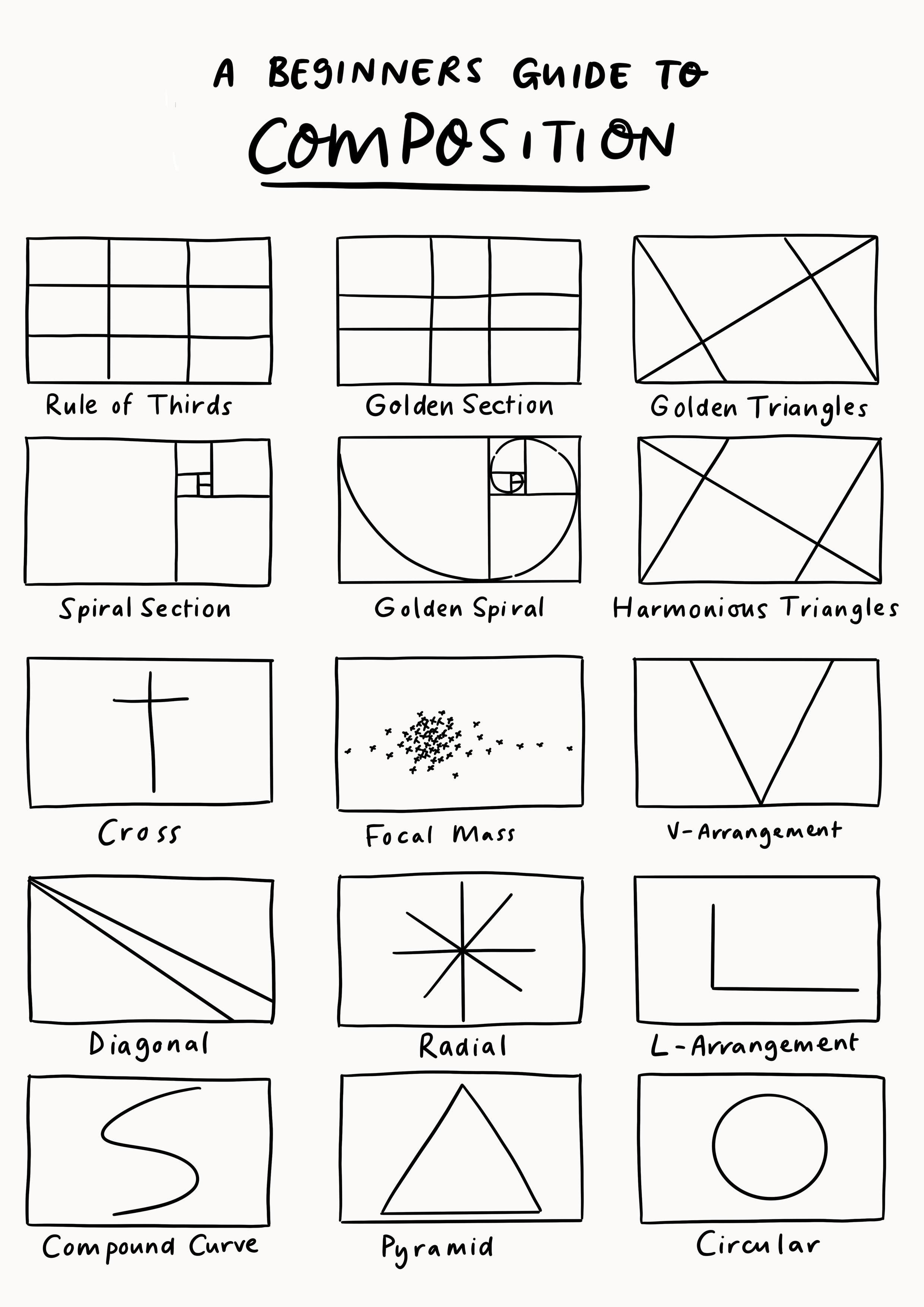
Photography isn’t just about capturing what’s in front of you — it’s about choosing how to show it. That’s where composition comes in. Composition is the art of arranging elements in your frame to guide the viewer’s eye and tell a story.
💡 The Basics of Composition
Good composition isn’t random — it’s deliberate. Some classic tools include:
Rule of Thirds: Divide your frame into nine parts. Place important elements along the lines or intersections to create balance.
Leading Lines: Roads, bridges, or fences that draw the eye toward the subject.
Symmetry: Creates harmony and elegance.
Negative Space: Empty areas that give the subject room to breathe and stand out.
🎨 Why Composition Matters
Composition decides what your viewers notice first, what they explore next, and what they remember. Two photos of the same scene can tell completely different stories depending on how you frame it.
For example, a street scene shot straight-on might feel flat and ordinary. Shoot it with a leading line toward a person in the distance, and suddenly it feels cinematic and full of movement.
🧠 Breaking the Rules
While these guidelines are helpful, the best photographers know when to break them. Unconventional framing can create tension, surprise, or a fresh perspective — as long as it serves the story.
The Takeaway
Composition is your invisible storyteller. By arranging elements thoughtfully, you guide emotions, highlight what matters, and make every shot intentional.
Next time you raise your camera, ask:
“How do I want the viewer to move through this image?”
The answer will change everything.